

Finding the cheapest ticket is easy. Finding the right flight? That’s where most travelers get stuck. With dozens of routes, confusing layovers, and fluctuating prices, choice paralysis can quickly take over. This guide goes beyond the price tag to show you how to use flight route comparison tools strategically—so you can balance cost, convenience, and comfort with confidence. After planning thousands of complex itineraries, we’ve refined a repeatable framework that cuts through the noise. You’ll learn how to evaluate routes, compare schedules, and book a flight that truly fits your travel goals—without second-guessing your decision.
First, Define Your “Best”: Are You Optimizing for Price, Speed, or Sanity?
Before you even think about booking, define what “best” actually means to you. The best flight isn’t universal—it’s personal. Are you optimizing for price, time, or pure sanity (yes, that’s a metric)?
Cost vs. Time: Would you take a 6 a.m. departure with a two-hour layover to save $150? That $150 sounds great—until you’re buying airport coffee at dawn and losing a vacation day. Define your trade-off threshold in advance.
Convenience Factors: Secondary airports may look cheaper, but factor in transportation, parking, and recovery time from red-eyes. Tight connections increase missed-flight risk (DOT data shows delays affect roughly 20% of U.S. flights annually). Small margins equal big stress.
Airline & Alliance Loyalty: If you’re earning status or miles, filter by alliance first. Loyalty perks can outweigh minor price differences.
Pro tip: Use flight route comparison tools to spot hidden time drains competitors rarely highlight.
For deeper planning, see this step by step guide to creating a stress free flight itinerary.
Your Core Toolkit: The Top 3 Flight Comparison Engines
If you book flights often enough, you’ll eventually make an expensive mistake. I once locked in a “great deal” to Barcelona—only to see the price drop $120 two days later (painful lesson). Since then, I’ve relied on three flight route comparison tools that cover 90% of travel planning.
Here’s how to use them—and what not to do.
- Google Flights: The Speed King
Google Flights is built for speed and flexibility. Its Date Grid shows fares across multiple departure and return combinations in a clean calendar format. The Price Graph maps fare changes over weeks or months, making trends instantly visible.
Mistake I made: ignoring the graph and booking for a Saturday departure. When I checked later, flying Tuesday saved nearly 18%—a pattern backed by studies showing midweek departures are often cheaper (Hopper, 2023).
Lesson: Always scan a full month before committing. (Yes, even if you’re “pretty sure” about your dates.)
- Skyscanner: The Global Explorer
Skyscanner shines by including many budget and international carriers others miss. Its Search Everywhere feature lets you enter your departure city and see the cheapest destinations worldwide.
I once assumed a direct flight to Rome was my best bet. A quick “Everywhere” search revealed Milan was $90 cheaper—train ride included, I still saved money.
Pro tip: Use “Whole Month” to uncover hidden low-fare windows.
- Momondo: The Data Visualizer
Momondo stands out with color-coded results that weigh price, duration, and layovers on one screen. Its Flight Insights tool analyzes how factors like day of the week affect fares.
I used to chase the absolute lowest price, ignoring a 10-hour layover (rookie move). Momondo’s visual balance helped me see when paying $40 more saved six hours.
The takeaway? Tools don’t just find deals—they prevent regret.
Unlocking Pro-Level Insights: Tools the Experts Use
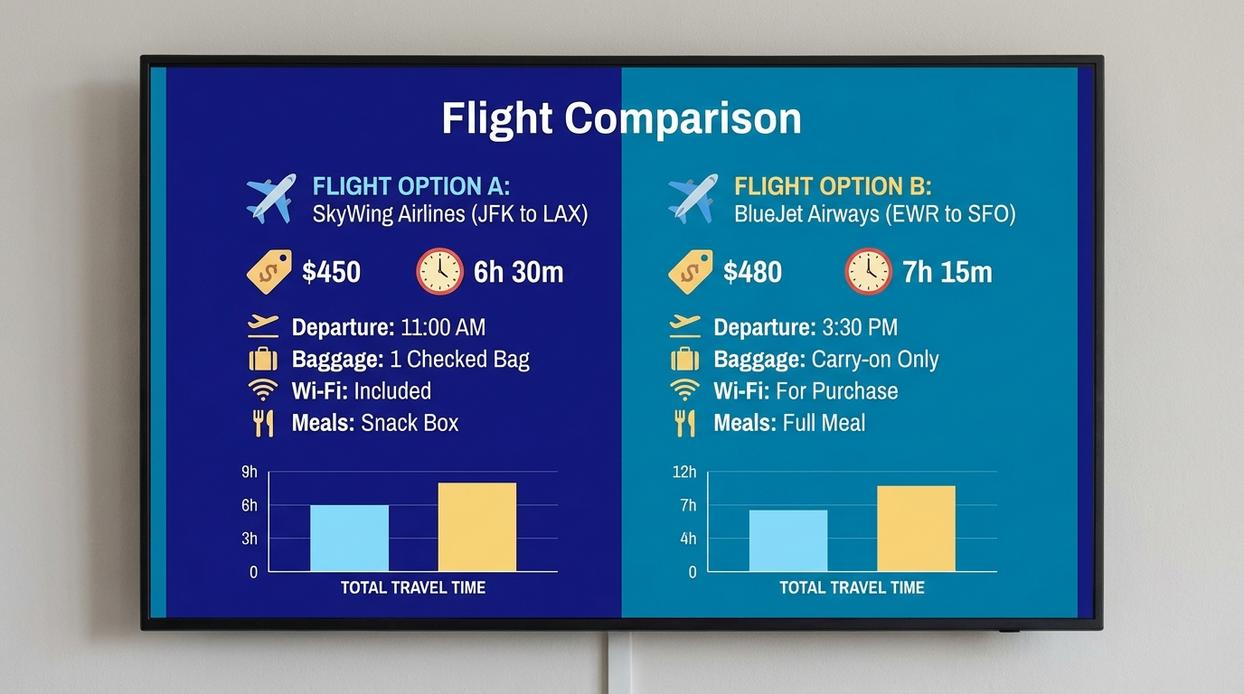
Basic search engines show you prices. Power platforms show you possibilities.
First up: ITA Matrix. Think of it as Google Flights with the hood open. It’s the underlying software that powers many booking engines—but unlike them, it lets you run advanced queries. Want to search a specific fare class (the letter code that determines upgrade eligibility and mileage earnings)? You can. Prefer a 2–3 day layover in Tokyo instead of a rushed two-hour connection? Also possible.
Here’s a simple beginner use-case: compare a nonstop economy ticket versus a one-stop itinerary booked into a higher fare class that earns more miles. Same route, different long-term value. While standard flight route comparison tools show price differences, ITA Matrix reveals structural differences in the ticket itself.
On the other hand, FlightAware answers a different question: Will this flight actually run on time? Instead of trusting the schedule, check the history. Enter a flight number and review its on-time percentage, average delay length, and cancellation trends. Choosing between two tight connections? A flight with an 82% on-time record beats one hovering at 60% (statistics matter).
Price vs performance. Search flexibility vs reliability data. Pros use both—because smart planning happens before you click “buy.”
The 5-Step Playbook for Booking Your Ideal Route
This is where browsing turns into booking. Follow this sequence and you’ll move from “just looking” to locked-in itinerary.
Step 1: Start Broad. Begin with Google Flights or Skyscanner and flexible dates. First, scan the calendar view to spot the cheapest travel window. Think of it as reconnaissance (before you commit to battle).
Step 2: Narrow Your Options. Next, choose two or three contenders based on your definition of “best”—price, departure time, or minimal layovers. Define your priority clearly; otherwise, you’ll chase every shiny fare.
Step 3: Verify Performance. Then check FlightAware to review on-time history. A bargain isn’t a bargain if it’s chronically delayed.
Step 4: Cross-Reference. Run your finalist through Momondo or other flight route comparison tools to confirm pricing consistency.
Step 5: Book Direct (Usually). Finally, compare with the airline’s site. Managing changes is typically smoother.
Looking ahead, airlines may lean harder into dynamic pricing models—so acting decisively could matter even more in the near future (speculation, but likely).
To enhance your route comparison process even further, consider exploring our detailed guide on using Ttweakmaps for optimal navigation and planning – for more details, check out our Map Ttweakmaps.
From Overwhelmed to Empowered: Book Your Next Trip with Confidence
You came here feeling overwhelmed by endless tabs, confusing routes, and the fear of booking the wrong flight. Now, you have a clear strategy to cut through the noise. By pairing smart exploration on Skyscanner with real-time reliability checks on FlightAware, you’re no longer guessing—you’re choosing with confidence.
Travel planning doesn’t have to feel chaotic or risky. With the right flight route comparison tools and a simple, repeatable process, you can book the right flight every time.
Ready to stop second-guessing your travel plans? Join thousands of savvy travelers who rely on our proven flight planning insights—start planning your next trip today and book with total confidence.

 Thelma Lusteraders is the kind of writer who genuinely cannot publish something without checking it twice. Maybe three times. They came to airline booking tips and destinations through years of hands-on work rather than theory, which means the things they writes about — Airline Booking Tips and Destinations, Travel Horizon Headlines, Hidden Gems, among other areas — are things they has actually tested, questioned, and revised opinions on more than once.
That shows in the work. Thelma's pieces tend to go a level deeper than most. Not in a way that becomes unreadable, but in a way that makes you realize you'd been missing something important. They has a habit of finding the detail that everybody else glosses over and making it the center of the story — which sounds simple, but takes a rare combination of curiosity and patience to pull off consistently. The writing never feels rushed. It feels like someone who sat with the subject long enough to actually understand it.
Outside of specific topics, what Thelma cares about most is whether the reader walks away with something useful. Not impressed. Not entertained. Useful. That's a harder bar to clear than it sounds, and they clears it more often than not — which is why readers tend to remember Thelma's articles long after they've forgotten the headline.
Thelma Lusteraders is the kind of writer who genuinely cannot publish something without checking it twice. Maybe three times. They came to airline booking tips and destinations through years of hands-on work rather than theory, which means the things they writes about — Airline Booking Tips and Destinations, Travel Horizon Headlines, Hidden Gems, among other areas — are things they has actually tested, questioned, and revised opinions on more than once.
That shows in the work. Thelma's pieces tend to go a level deeper than most. Not in a way that becomes unreadable, but in a way that makes you realize you'd been missing something important. They has a habit of finding the detail that everybody else glosses over and making it the center of the story — which sounds simple, but takes a rare combination of curiosity and patience to pull off consistently. The writing never feels rushed. It feels like someone who sat with the subject long enough to actually understand it.
Outside of specific topics, what Thelma cares about most is whether the reader walks away with something useful. Not impressed. Not entertained. Useful. That's a harder bar to clear than it sounds, and they clears it more often than not — which is why readers tend to remember Thelma's articles long after they've forgotten the headline.