
Planning your next trip can feel overwhelming with constant travel headlines, fluctuating airfares, and endless destination options competing for your attention. Whether you’re searching for smarter flight booking strategies, practical packing hacks, or inspiration beyond the usual tourist hotspots, this article is designed to give you clear, actionable guidance that saves you time and money.
Many travelers struggle to find reliable, up-to-date advice that actually improves their travel experience—from choosing the right time to book a flight to discovering hidden destination gems and lesser known national parks that offer unforgettable experiences without the crowds. Here, you’ll find practical insights rooted in real-world travel trends, careful research, and proven planning strategies.
We closely follow airline updates, fare patterns, and emerging travel destinations to ensure the information you’re reading is relevant and useful right now. By the end of this guide, you’ll have the tools to book smarter, pack lighter, and explore more confidently—without second-guessing every decision along the way.
Beyond the Grand Canyon Escape
Picture this: bumper-to-bumper traffic snaking toward a “scenic” overlook, parking lots packed, selfie sticks everywhere. It’s basically nature’s version of Black Friday. And yet, you’re craving silence, space, and that goosebump moment when a landscape feels untouched.
That’s why I always recommend skipping the obvious hotspots. Instead, consider places like Great Basin National Park, where dark skies and quiet trails outnumber tour buses. Frankly, I think solitude is the luxury.
In this guide, you’ll discover where to go, when to visit, and what to do for uncrowded, awe-inspiring adventures. Because nature feels pure without audience.
North Cascades, Washington: The American Alps
Just 2.5 hours northeast of Seattle, the North Cascades feel a world away. Despite their proximity to a major tech hub, they remain one of America’s most dramatically under-visited mountain ranges. Why? Rugged, glacier-carved peaks and over 300 glaciers demand preparation and respect. Casual sightseers often opt for easier parks, leaving these wild ridgelines to serious hikers (and the occasional marmot).
Unlike more publicized, lesser known national parks that saw attendance spikes after 2020, visitation here has grown slowly over the past decade, preserving its quiet appeal.
Best Time to Visit
Late July through September offers the most stable weather. By August, most high-elevation snow has melted, opening iconic routes.
| Month | Trail Access | Weather Stability |
|---|---|---|
| May–June | Limited |
Unpredictable |
| July–Sept | Excellent | Most Stable |
Must-do stops include Diablo Lake Vista Point for an easy, jaw-dropping overlook of turquoise water. Hikers should tackle Cascade Pass Trail, a classic day hike with alpine views that feel straight out of The Lord of the Rings.
Fly into Seattle-Tacoma (SEA) or Paine Field (PAE), rent a car, and enjoy the scenic drive.
Great Basin, Nevada: Stars, Caves, and Ancient Trees
Why It’s Uncrowded
Great Basin National Park sits in eastern Nevada, closer to the Utah border than to Las Vegas. There’s no major interstate nearby, no resort town at the gates—just U.S. Route 50 (nicknamed “The Loneliest Road in America”). That extreme isolation naturally keeps visitor numbers low (you won’t be elbowing anyone for a sunset photo).
Best Time to Visit
Aim for May–June or September–October. Summer brings intense high-desert heat; winter can blanket Wheeler Peak in snow. The park is an International Dark Sky Park, meaning minimal light pollution—ideal for Milky Way photography and ranger-led astronomy nights.
Must-Do Activities
- Lehman Caves tour (book ahead; tours often sell out)
- Bristlecone Pine Trail to see trees over 4,000 years old
| Quick Facts | Details |
|—|—|
| Nearest Airports | LAS or SLC (4–5 hrs) |
| Elevation Range | 5,000–13,000+ ft |
| Fuel Stops | Limited—plan ahead |
Travel Tip: Fill up on gas in Ely. Stock water, too. Remote parks reward preparation. If you love lesser known national parks, this one rivals spots like those in secret foodie cities youve probably never considered.
Dry Tortugas, Florida: A Remote Tropical Paradise

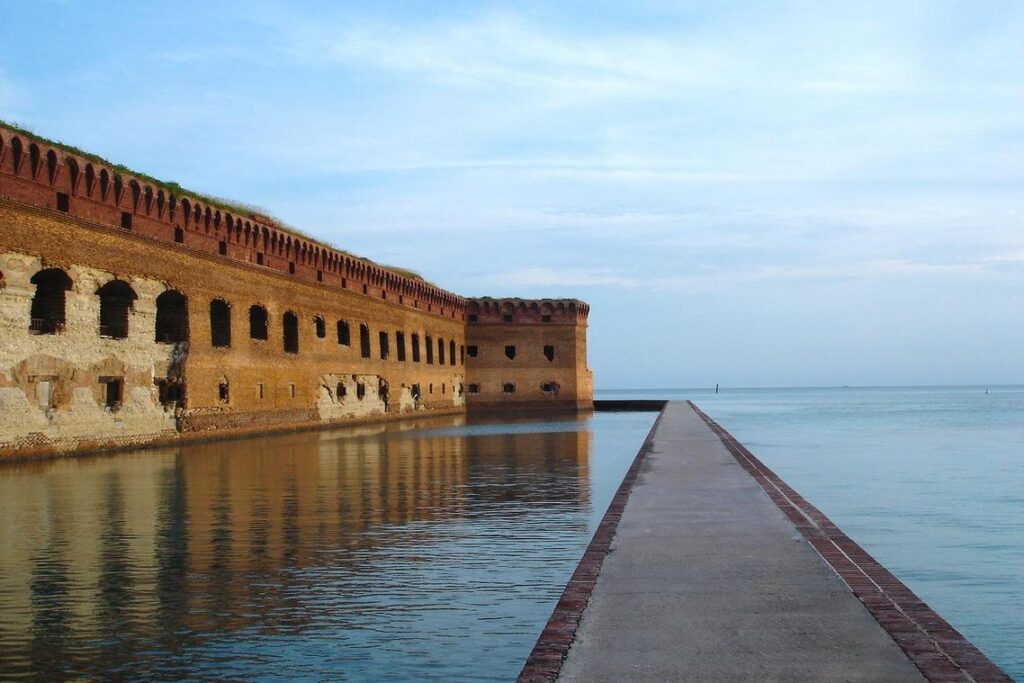
If you’ve ever wished for turquoise water without the shoulder‑to‑shoulder crowds, Dry Tortugas delivers. Because it’s accessible only by a daily ferry or seaplane, visitor numbers are strictly capped. In other words, no surprise tour buses rolling in by noon.
Best Time to Go
Plan your trip between November and May. During these months, seas are calmer and temperatures are milder, which makes exploring Fort Jefferson and snorkeling far more enjoyable (and far less seasick-inducing).
How to Book the Ferry
- Visit the official ferry website departing from Key West.
- Check availability for your dates.
- Reserve tickets at least 2–3 months in advance—prime dates sell out quickly.
- Arrive 45 minutes early for check-in and safety briefing.
Pro tip: Set a calendar reminder six months before peak season.
Must-Do Activities
Snorkel the crystal-clear reefs for vibrant coral and tropical fish, then join the guided Fort Jefferson tour to understand this 19th-century coastal fortress (it feels like stepping into a pirate movie set).
Unlike many lesser known national parks, logistics here require real planning—but that’s exactly why it stays pristine.
Isle Royale, Michigan: The Ultimate Wilderness Escape
If you’re craving true solitude, choose Isle Royale. Because it’s isolated in Lake Superior and only open from April through October, it remains one of America’s most uncrowded parks. In fact, the National Park Service reports it sees fewer visitors annually than many parks host in a single day (NPS.gov). So if you’ve been frustrated by packed trails elsewhere, this is your reset button.
For the best experience, plan your trip in August or September. Not only are temperatures ideal for hiking, but bugs thin out—and you might even hear the island’s famous wolves howling at dusk (a real Yellowstone moment, minus the crowds).
Next, commit to a multi-day trek on the Greenstone Ridge Trail. This 40-mile spine of the island delivers sweeping views and deep forest immersion. Alternatively, take a boat tour and day-hike remote coves.
Finally, book ferries from Houghton or Copper Harbor, Michigan, or Grand Portage, Minnesota—and pack for full self-sufficiency. Unlike many lesser known national parks, services here are minimal. Bring layers, food, and a detailed plan.
Planning Your Off-the-Beaten-Path Park Adventure
There’s a special thrill in booking a trip to a park where the night sky feels velvety and endless and the roads hum quietly beneath your tires. But getting there takes strategy.
Booking Flights
Set flight alerts through tools like Google Flights or Skyscanner (fare alerts notify you when prices drop). Consider nearby regional airports—sometimes a smaller runway means fewer crowds and a crisp, pine-scented arrival without the chaos of major hubs. Is it always convenient? Not exactly. But the savings can mean an extra guided tour or two.
Rental Vehicles
For remote parks like Great Basin National Park, a reliable vehicle isn’t optional. Unpaved roads can rattle your teeth, and low-clearance cars struggle on washboard terrain. A 4WD or high-clearance SUV grips gravel with confidence (think less white-knuckling, more scenic cruising).
Packing Essentials
- Offline maps (AllTrails or Gaia GPS)
- Extra water and nonperishable food
- First-aid kit
- Portable power banks
- Layers for shifting temperatures
Wind can turn sharp after sunset, carrying the mineral scent of desert stone.
Lodging Logistics
In-park cabins and campsites book fast—sometimes months ahead. Nearby towns may offer limited rooms, especially in peak season. Reserve early so your adventure begins with birdsong, not a “No Vacancy” sign glowing in the dark.
As you plan your adventure to explore these hidden gems of our national parks, don’t forget to check out our Step-by-Step Guide to Creating a Stress-Free Flight Itinerary to ensure your journey is as smooth as the scenic views you’ll encounter.
Plan Smarter, Travel Better
You came here looking for smarter ways to navigate flight bookings, uncover better travel strategies, and discover hidden gems—including lesser known national parks that most travelers overlook. Now you have the tools to avoid overpaying, pack efficiently, and plan with confidence instead of guesswork.
Travel planning can feel overwhelming—rising fares, confusing policies, crowded destinations. But with the right insights, you can skip the stress and focus on the experience. The key is staying informed, flexible, and proactive before you ever step foot in the airport.
Here’s your next move: put these strategies into action on your next trip. Compare fares strategically, plan ahead for peak seasons, and explore destinations beyond the obvious hotspots.
If you’re tired of missing deals or settling for average trips, start using trusted, top-rated travel insights to guide every booking. Get the latest tips, uncover smarter routes, and turn every getaway into a seamless experience—check the newest travel updates now and plan your next trip with confidence.

 Gavren Vosswyn writes the kind of airline booking tips and destinations content that people actually send to each other. Not because it's flashy or controversial, but because it's the sort of thing where you read it and immediately think of three people who need to see it. Gavren has a talent for identifying the questions that a lot of people have but haven't quite figured out how to articulate yet — and then answering them properly.
They covers a lot of ground: Airline Booking Tips and Destinations, Travel Horizon Headlines, Hidden Gems, and plenty of adjacent territory that doesn't always get treated with the same seriousness. The consistency across all of it is a certain kind of respect for the reader. Gavren doesn't assume people are stupid, and they doesn't assume they know everything either. They writes for someone who is genuinely trying to figure something out — because that's usually who's actually reading. That assumption shapes everything from how they structures an explanation to how much background they includes before getting to the point.
Beyond the practical stuff, there's something in Gavren's writing that reflects a real investment in the subject — not performed enthusiasm, but the kind of sustained interest that produces insight over time. They has been paying attention to airline booking tips and destinations long enough that they notices things a more casual observer would miss. That depth shows up in the work in ways that are hard to fake.
Gavren Vosswyn writes the kind of airline booking tips and destinations content that people actually send to each other. Not because it's flashy or controversial, but because it's the sort of thing where you read it and immediately think of three people who need to see it. Gavren has a talent for identifying the questions that a lot of people have but haven't quite figured out how to articulate yet — and then answering them properly.
They covers a lot of ground: Airline Booking Tips and Destinations, Travel Horizon Headlines, Hidden Gems, and plenty of adjacent territory that doesn't always get treated with the same seriousness. The consistency across all of it is a certain kind of respect for the reader. Gavren doesn't assume people are stupid, and they doesn't assume they know everything either. They writes for someone who is genuinely trying to figure something out — because that's usually who's actually reading. That assumption shapes everything from how they structures an explanation to how much background they includes before getting to the point.
Beyond the practical stuff, there's something in Gavren's writing that reflects a real investment in the subject — not performed enthusiasm, but the kind of sustained interest that produces insight over time. They has been paying attention to airline booking tips and destinations long enough that they notices things a more casual observer would miss. That depth shows up in the work in ways that are hard to fake.