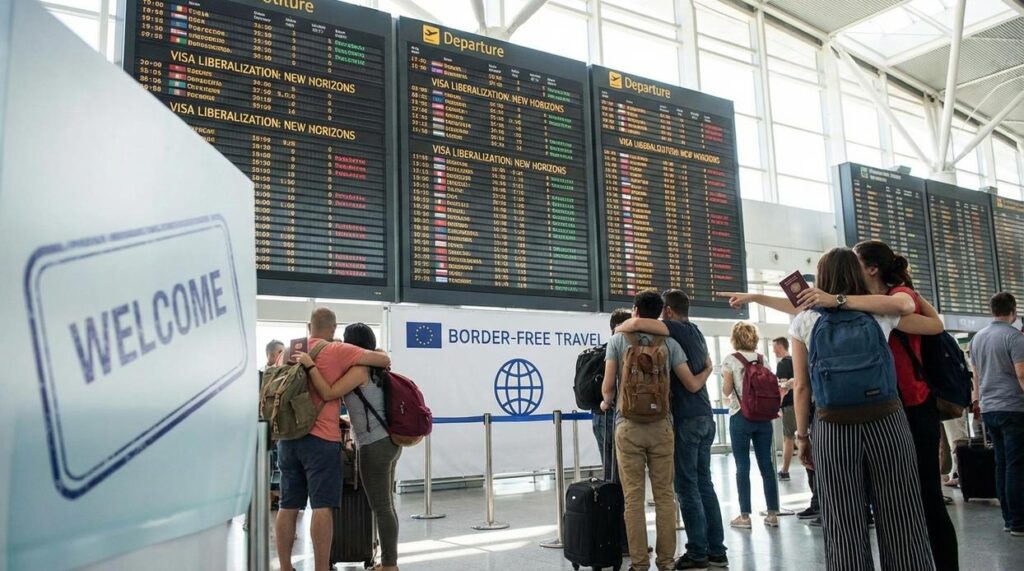
Travel rules are shifting faster than ever, and staying informed about international visa policy changes can mean the difference between a seamless trip and a stressful airport surprise. If you’re planning to travel abroad in the coming months, you likely want clear, up-to-date information that helps you avoid delays, unexpected fees, or denied boarding.
This article breaks down the latest international visa policy changes, explaining what’s new, which destinations are affected, and how these updates could impact your travel plans. We focus on practical details travelers actually need—entry requirements, processing timelines, transit rules, and documentation updates—so you can plan with confidence.
Our insights are based on continuous monitoring of official government releases, airline advisories, and verified travel bulletins. Instead of vague summaries, you’ll get straightforward explanations and actionable guidance to help you book smarter, prepare properly, and travel internationally without unnecessary complications.
Visa rules change fast, and that uncertainty can make even seasoned travelers nervous. One month a country is visa-free; the next it requires an online pre-approval. This guide simplifies the biggest international visa policy changes shaping trips right now. Think of a visa as official permission to enter, while a digital nomad visa lets remote workers live abroad legally for extended stays.
Here’s what to watch:
- Schengen Zone updates affecting how long you can stay within Europe’s border-free area.
- Simplified tourist entries using digital forms instead of embassy visits.
Clear rules mean smarter planning (and fewer airport surprises).
The Rise of the Digital Nomad: New Visas for Remote Workers
The digital nomad visa is a government-issued permit that allows remote workers to live abroad while earning income from employers or clients outside the host country. What started as a pandemic workaround has become a global talent grab. Nations facing aging populations, off-season tourism slumps, or startup talent shortages are rolling out tailored programs to attract location-independent professionals (think less backpacker, more MacBook-and-espresso regular).
Some critics argue these visas inflate rents and create “two-tier” local economies. That concern isn’t unfounded—Lisbon saw housing pressure spike alongside foreign demand (OECD housing data, 2023). But governments counter that targeted income thresholds and tax structures help ensure net-positive economic impact. In short: it’s a balancing act shaped by ongoing international visa policy changes.
Spotlight on Key Countries
Spain
• Income requirement: ~€2,334/month (200% of minimum wage)
• Process: Apply via Spanish consulate or from within Spain
• Benefits: Reduced 24% tax rate under Beckham Law; potential residency path after 5 years
Japan
• Income requirement: ¥10 million/year
• Process: Apply before arrival; limited to 6 months
• Benefits: Access to world-class infrastructure; family accompaniment allowed
South Korea
• Income requirement: ~KRW 85 million/year
• Process: Embassy application with strict documentation
• Benefits: Renewable 1-year stay; access to national health system
Actionable Checklist
Prepare:
• Proof of remote income (contracts, payslips)
• Health insurance valid abroad
• Clean background check
• Accommodation details
• Valid passport with required validity buffer
Pro tip: Keep notarized and translated copies ready—consulates love paperwork (and they rarely laugh at excuses).
Navigating Europe: The ETIAS System and Schengen Area Updates
If you’re planning a European getaway, you’ve probably heard about ETIAS—and wondered, Is this a new visa? Short answer: no.
The European Travel Information and Authorisation System (ETIAS) is a travel authorization, not a visa. It applies to travelers from countries that currently enjoy visa-free access to the Schengen Area (like the U.S., Canada, Australia, and others). Think of it as a pre-travel security screening—similar to the U.S. ESTA. You apply online before departure, receive approval electronically, and your authorization is linked to your passport.
Implementation Timeline
ETIAS is expected to launch in 2026, following the rollout of the EU’s Entry/Exit System. Officials have indicated there will be a transition period, meaning travelers may initially have time to adjust before authorization becomes mandatory. Because of ongoing international visa policy changes, timelines can shift—so always check official EU sources before booking.
How to Prepare
The application process is designed to be simple:
- Valid passport from an eligible country
- Personal details and travel information
- Security and health-related questions
- Application fee of €7 (for travelers aged 18–70)
Most approvals are expected within minutes. Once granted, ETIAS will generally be valid for three years or until your passport expires.
Common Concerns
Worried about the 90/180-day rule? ETIAS does not change it. You can still stay up to 90 days within any 180-day period in the Schengen Zone. ETIAS simply authorizes travel—it doesn’t extend your stay.
In short, plan ahead, apply early, and keep your passport current (a small step that prevents big airport headaches).
Asia’s Open Door: How Tourist Visa Policies Are Easing
Southeast and East Asia are racing to revive tourism, and the numbers prove it. The UN World Tourism Organization reported Asia-Pacific arrivals rebounded to roughly 65% of pre-pandemic levels in 2024, pushing governments to accelerate international visa policy changes that lower entry barriers. In plain terms, visa-exempt means travelers can enter without applying in advance, while visa-on-arrival allows paperwork at the airport (far less stressful than embassy visits).
Thailand offers a clear case study. In 2024, it expanded visa-exempt stays for dozens of countries from 30 to 60 days and increased visa-on-arrival eligibility to boost its target of 40 million visitors. Officials have also floated long-term tourist visas aimed at digital nomads and retirees—travelers who spend more per trip, according to Thailand’s Ministry of Tourism and Sports.
China has taken similarly concrete steps. It widened its 72- and 144-hour visa-free transit schemes and granted short-stay visa-free access to several European and Asian nationalities in 2023–2024, leading to double-digit increases in inbound bookings reported by major travel platforms.
For travelers, this means smoother multi-country itineraries, lower pre-trip costs, and more spontaneous planning—fitting neatly with broader shifts explored in [the rise of sustainable tourism and its global impact].
Key Visa-Free Travel Agreements to Watch
Bilateral agreements are deals between two countries that let travelers enter without a traditional visa, often for short stays. In simple terms, you show up with your passport and go. Because governments regularly negotiate new access, international visa policy changes can happen quickly. Recently, Brazil and the United Arab Emirates expanded reciprocal visa-free entry, while several Gulf states eased rules for select South American passport holders. Meanwhile, China added short-term access for certain European travelers. Sounds straightforward, right? Still, rules shift. Before booking, verify details through official embassy sites or the IATA Travel Centre.
Stay Ahead of the Curve
Staying informed about digital nomad visas, ETIAS, and regional tourism rules is no longer optional; it is essential for smooth travel. Regulations shift quickly, and international visa policy changes can appear with little notice. Relying on outdated blog posts can mean denied boarding, surprise fees, or a ruined itinerary (the kind that ends before takeoff).
The good news? You are now better prepared.
Before you book:
- Verify entry requirements on official government websites.
Use this guide as your strategic starting point, then double-check details before finalizing plans to travel confidently every single time abroad.
Stay Ahead of Changing Travel Rules and Fly Smarter
You came here to make sense of the latest international visa policy changes and how they affect your upcoming travel plans. Now you have a clearer understanding of what’s shifting, what it means for your destination, and how to avoid unexpected disruptions at the airport.
Travel uncertainty is stressful. The last thing you want is to book a flight, pack your bags, and realize a new visa rule or documentation update has derailed your trip. Staying informed isn’t just helpful — it’s essential to protecting your time, money, and peace of mind.
The smartest travelers double-check entry requirements, confirm documentation before booking, and monitor updates right up until departure. Taking a few proactive steps now can save you from costly rebookings, denied boarding, or last-minute cancellations.
Don’t risk travel delays or denied entry because of outdated information. Get the latest updates, smart booking strategies, and expert travel alerts trusted by thousands of frequent flyers. Check the newest travel insights now and make your next international trip smooth, stress-free, and fully prepared.