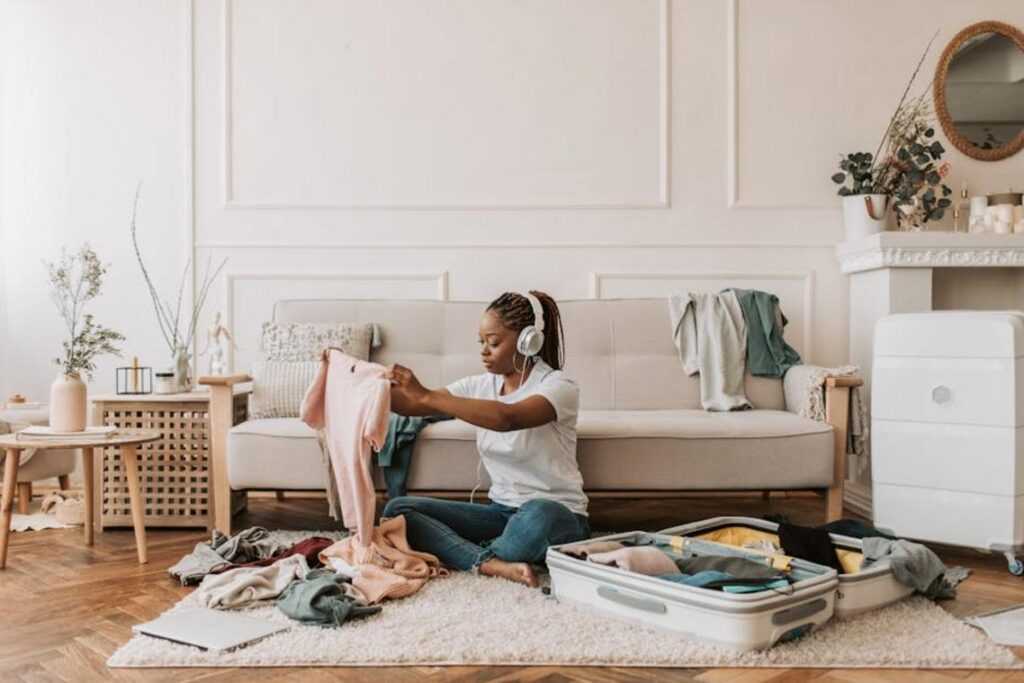

We’ve all been there—sitting on an overstuffed suitcase, praying the zipper holds, only to face surprise baggage fees at the airport. The real problem isn’t packing too much; it’s packing inefficiently. Wasted space, poor organization, and last-minute cramming create unnecessary stress before your trip even begins. After years of navigating tight baggage restrictions and countless flights, I’ve learned that smarter systems make all the difference. In this guide, you’ll discover proven space saving packing techniques that transform how you prepare—whether it’s a quick weekend escape or a month-long adventure—so you can travel lighter, calmer, and more confidently.
The Foundation: Choosing Gear That Optimizes From the Start
Smart packing starts with the right gear. Get this wrong, and no amount of folding wizardry will save you.
Luggage Selection: Hard vs. Soft
A hard-shell suitcase has a rigid exterior (usually polycarbonate or ABS plastic). It protects fragile items and resists rain, but it doesn’t flex. Once it’s full, it’s FULL.
A soft-shell suitcase uses fabric sides, which means built-in flexibility and exterior pockets. That stretch can make a difference when you’re squeezing in last-minute items (we’ve all done it). Those outer compartments are also ideal for chargers or documents.
Some travelers argue hard-shell bags are superior for durability. Fair point. But if maximizing capacity is your goal, soft-shell often wins for adaptability alone.
The Power of Packing Cubes
Packing cubes are zippered fabric containers that divide your suitcase into sections. Standard cubes SORT items. Compression cubes reduce bulk by using a second zipper to press air out.
Think of them as drawers inside your luggage—ORGANIZED and efficient. They’re foundational to space saving packing techniques.
Vacuum Seal Bags: A Tool for Bulky Items
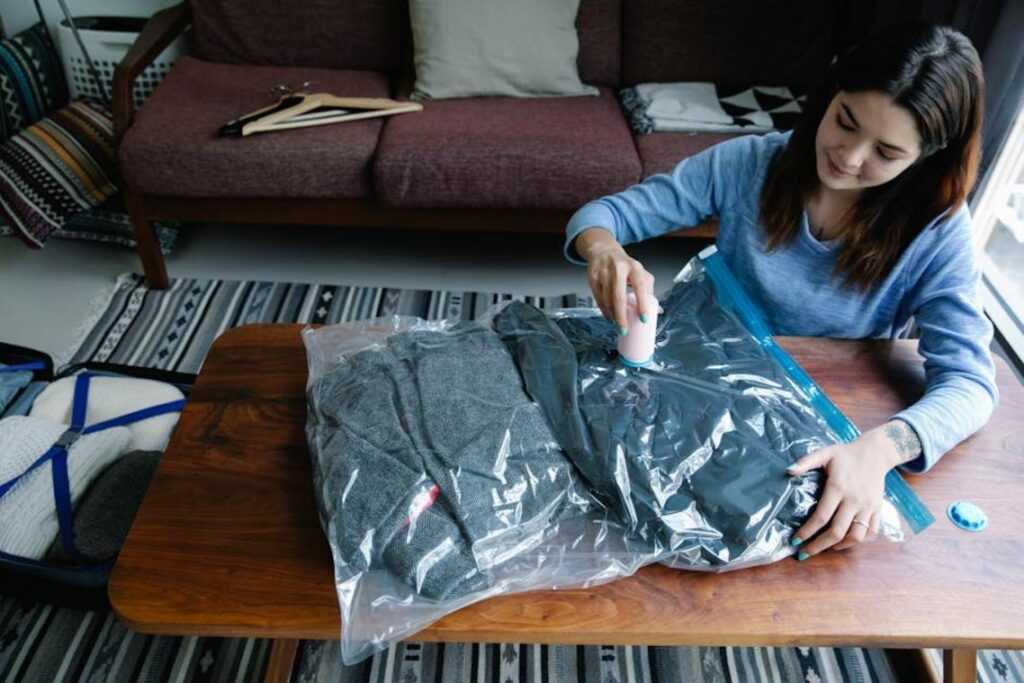
Vacuum bags remove air to flatten bulky clothing like winter coats. Great for ski trips.
- Watch airline WEIGHT limits.
- Ensure vacuum access for your return.
For breakables, review how to pack fragile items safely in your luggage before sealing everything tight.
Core Techniques: The Art of the Roll, Fold, and Bundle
“Wait, you roll everything?” my friend asked while staring at my carry-on. “Isn’t folding the proper way?”
It depends.
Let’s start with The Rolling Method—a technique where you tightly coil garments into compact cylinders to reduce air pockets (the hidden culprit behind bulky bags). According to travel tests by Condé Nast Traveler, rolling can reduce creasing in soft fabrics compared to traditional folding (Condé Nast Traveler, 2023).
Best items to roll:
- T-shirts
- Leggings
- Pajamas
- Casual dresses
- Athletic wear
Step-by-step:
- Lay the item flat and smooth out wrinkles.
- Fold sleeves or edges inward to create a rectangle.
- Roll tightly from one end, applying even pressure.
- Secure with a rubber band if needed (pro tip: reusable silicone bands work best).
Still, critics argue rolling causes deep creases. They’re not wrong—structured fabrics can protest.
That’s where Strategic Folding wins. Structured garments (meaning tailored or shape-retaining pieces) like blazers, dress shirts, and trousers benefit from careful folding along natural seams. “You want to respect the architecture of the garment,” a tailor once told me. Think less crumpled laundry pile, more James Bond packing for Monaco.
For compression lovers, try the ranger roll—a hybrid military-inspired method that folds first, then rolls into a tight bundle. It’s one of the most reliable space saving packing techniques for sturdy clothing.
Finally, Bundle Wrapping Explained. This advanced method layers clothing around a central “core” (often a packing cube or pouch). Place wrinkle-prone items like dresses or slacks flat, then wrap them around the core in alternating directions. The tension prevents sharp creases.
“It looks complicated,” someone once told me mid-pack.
It is—at first. But once mastered, it’s like origami for adults (with fewer paper cuts and better outfits).
Filling the Gaps: The “No Space Wasted” Philosophy
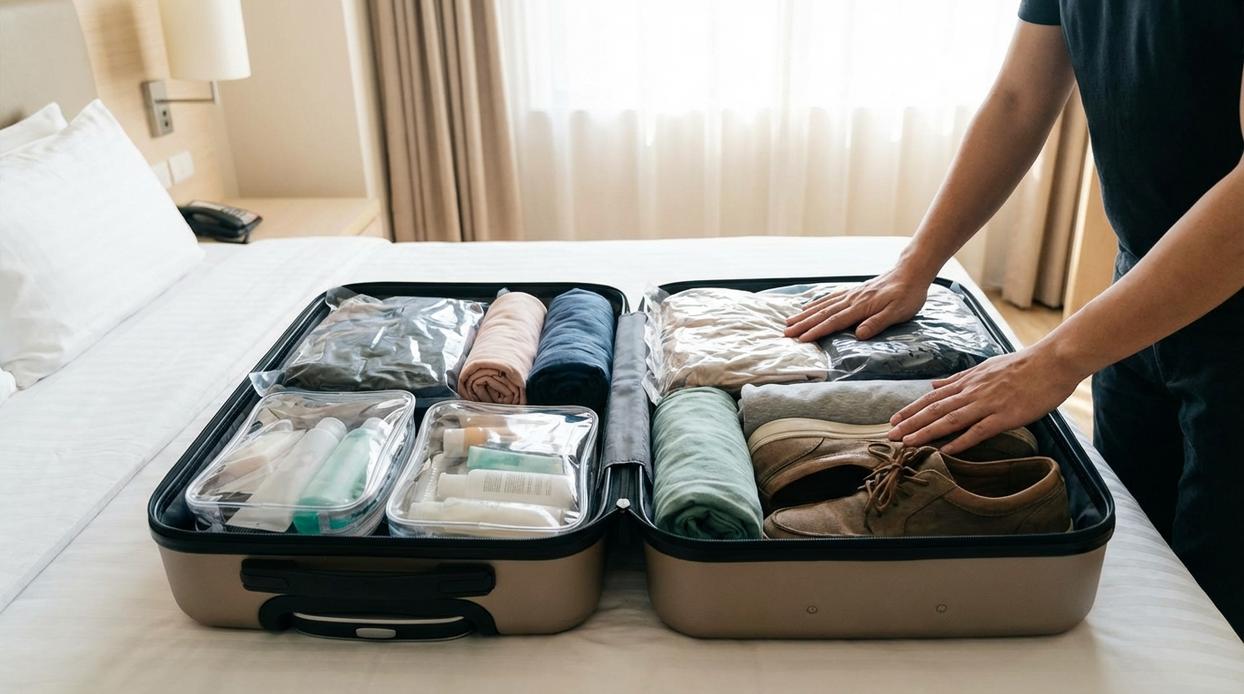
When people talk about efficient packing, they often mean using every inch of your suitcase intelligently. The “No Space Wasted” philosophy is exactly that: treating empty gaps as missed opportunities.
Leverage Your Shoes
Shoes create hollow space many travelers ignore. Instead of letting that cavity sit unused, fill it with socks, underwear, charging cables, or other soft items. This works because soft fabrics compress easily without damaging the shoe’s shape. Think of your shoes as mini storage bins (they’re basically tiny suitcases inside your suitcase).
The “Tetris” Approach to Packing
The “Tetris approach” simply means arranging items so they interlock, just like the game. Start with a stable base layer—packing cubes and shoes—then slide smaller objects into the gaps between them. This prevents shifting during transit and maximizes capacity. These space saving packing techniques reduce wasted air pockets, which is often what makes a bag feel “too small.”
Don’t Forget Pockets
Internal and external pockets are designed for organization. Store travel documents, chargers, or a spare pair of socks where they’re accessible but contained. It’s not just about fitting more—it’s about finding things quickly (especially when the boarding line is moving fast).
Downsizing Your Dopp Kit for Maximum Efficiency
Start with solid toiletries. Shampoo bars, conditioner bars, solid perfume, and toothpaste tablets eliminate liquid limits and shrink bulk. A single bar can last 50+ washes (per Ethique), making it lighter and longer-lasting than bottled versions. Next, switch to refillable silicone bottles. Fill them with your go-to products at home instead of buying flimsy minis that crack mid-trip. It’s cheaper and cuts waste.
For weekend travel, try the sample strategy. Save beauty counter minis or subscription box samples and build a micro-kit. Combine this with space saving packing techniques to keep your bag streamlined and security stress-free.
By mastering these space-saving packing techniques, frequent flyers not only maximize their luggage efficiency but can also take advantage of deals from resources like Ttweak airline discount codes to save on their travel expenses – for more details, check out our Ttweakairline Discount Codes.
Your Next Trip, Packed to Perfection
You started with one frustrating problem: never enough space in your bag. Now you know that with rolling, packing cubes, and smart gap-filling, that limitation disappears. The secret was never about bringing less—it was about using space saving packing techniques that work with your luggage, not against it.
An overstuffed suitcase creates stress before your trip even begins. Zippers strain, items wrinkle, and you’re left second-guessing every choice. Packing smarter removes that pressure and gives you control.
On your next trip, try just one of these techniques. Roll instead of fold. Use a cube. Fill the gaps. Experience how a small change transforms your entire travel routine.

 Shirley Farreliona is a passionate travel writer sharing practical tips, cultural insights, and inspiring stories that help travelers explore destinations smarter.