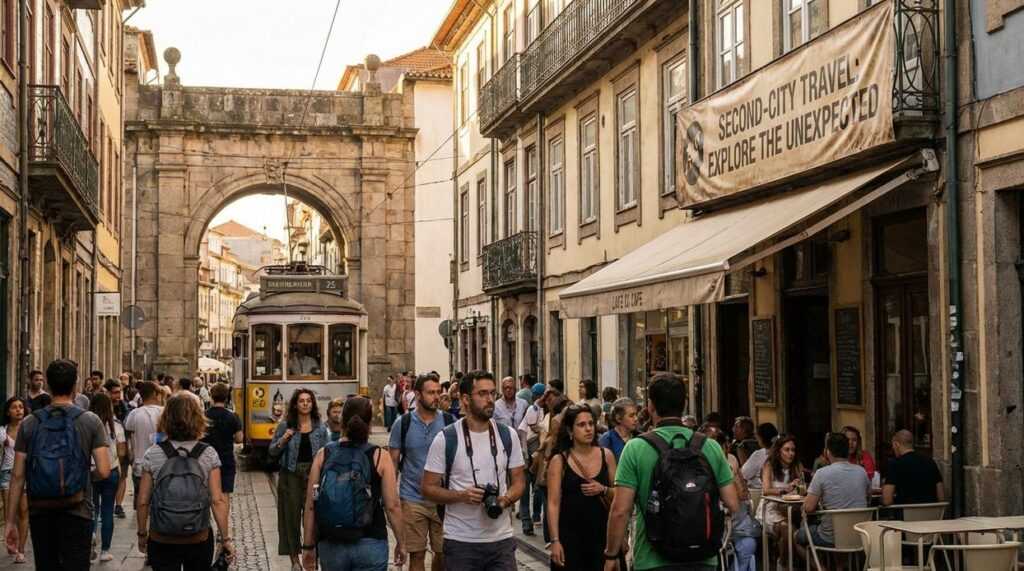
Trend 2: “Destination Dupes” Evolve into “Second-City” Exploration

For years, destination dupes—cheaper alternatives to famous hotspots—were the travel hack everyone bragged about. But in 2026, the mindset is shifting. Thanks to overtourism (when a destination becomes overcrowded to the point that it harms local life and visitor experience) and soaring prices in cities like Paris, Rome, and Tokyo, travelers aren’t just looking for cheaper. They’re looking for better.
That’s where second cities come in—culturally rich urban centers that aren’t the capital or headline act but deliver world-class experiences with fewer crowds.
Consider this:
- Lyon instead of Paris – France’s culinary capital, with bouchons (traditional Lyonnaise restaurants) and Renaissance architecture—minus Eiffel Tower-level queues.
- Bologna instead of Rome – Legendary pasta, medieval towers, and walkable streets (no Colosseum crowds required).
- Fukuoka instead of Tokyo – Coastal views, yatai street food stalls, and easier airport access.
Meanwhile, hidden gems gaining traction for 2026 include:
- Valencia, Spain – Beaches + futuristic architecture
- Porto, Portugal – Wine culture without Lisbon prices
- Osaka, Japan – Street food heaven with efficient transit
Airlines are adapting to global travel trends 2026 by adding more direct routes to secondary hubs. So before booking through a major capital, compare fares into nearby regional airports—you’ll often save time and money (pro tip: midweek departures tend to price lower).