
Flight delays feel random when you’re stuck at the gate—but they’re not. If you’re here, you’re likely trying to understand what really causes disruptions, how air traffic delay patterns form, and what you can do to avoid being caught in the ripple effect.
This article breaks down how delays spread across routes, why certain airports experience more congestion than others, and what seasonal and time-of-day trends mean for your travel plans. More importantly, you’ll learn practical strategies to book smarter, choose better flight windows, and minimize your risk of long waits and missed connections.
Our insights are based on current travel data, ongoing monitoring of airline performance trends, and analysis of recurring disruption cycles across major hubs. Instead of guesswork, you’ll get clear explanations and actionable tips designed to help you stay ahead of common delay triggers and make more confident travel decisions.
Why Your Flight Was Really Delayed
You know the feeling: you’re settled at the gate when your phone buzzes—delay, new gate, maybe both. It’s maddening. Most travelers blame “weather” or “the airline,” but the truth is more specific.
Here’s what’s really happening. Delays usually stem from crew rotations, late inbound aircraft, congested hubs, and seasonal storms that ripple across networks. Understanding air traffic delay patterns helps you predict risk.
Flights departing after 3 p.m. are statistically more likely to leave late (FAA data). Summer thunderstorms and winter snow compound issues.
Book earlier departures and choose less congested hubs when possible.
The Anatomy of a Delay: What the Official Data Tells Us
To understand why flights stall, we have to look at how the Bureau of Transportation Statistics (BTS) classifies delays. These categories shape the air traffic delay patterns we see every day.
National Aviation System (NAS) Delays cover issues like non-extreme weather, airport congestion, and air traffic control slowdowns. Think heavy rain in Atlanta or runway backups at JFK (not dramatic, just inconvenient). According to the BTS, NAS delays consistently account for a significant share of total delays nationwide.
Late-Arriving Aircraft Delays are the classic domino effect. If your plane lands late from Chicago, your departure to Denver likely leaves late too. Roughly 40% of delays in recent BTS reports are tied to late arrivals—proof that one hiccup can ripple all day.
Air Carrier Delays fall squarely within airline control:
- Maintenance issues
- Crew scheduling problems
- Fueling or baggage loading delays
Some argue airlines should eliminate these entirely. In theory, yes. In practice, tighter turnaround times make minor disruptions inevitable (planes aren’t pit crews at Daytona).
Finally, Extreme Weather Delays involve major events—hurricanes, blizzards, widespread thunderstorms. These are less frequent but more disruptive.
Speculation: As climate volatility increases, extreme weather delays may grow in frequency, forcing airlines to build wider scheduling buffers in the coming decade.
Riding the Waves: Seasonal and Daily Delay Trends
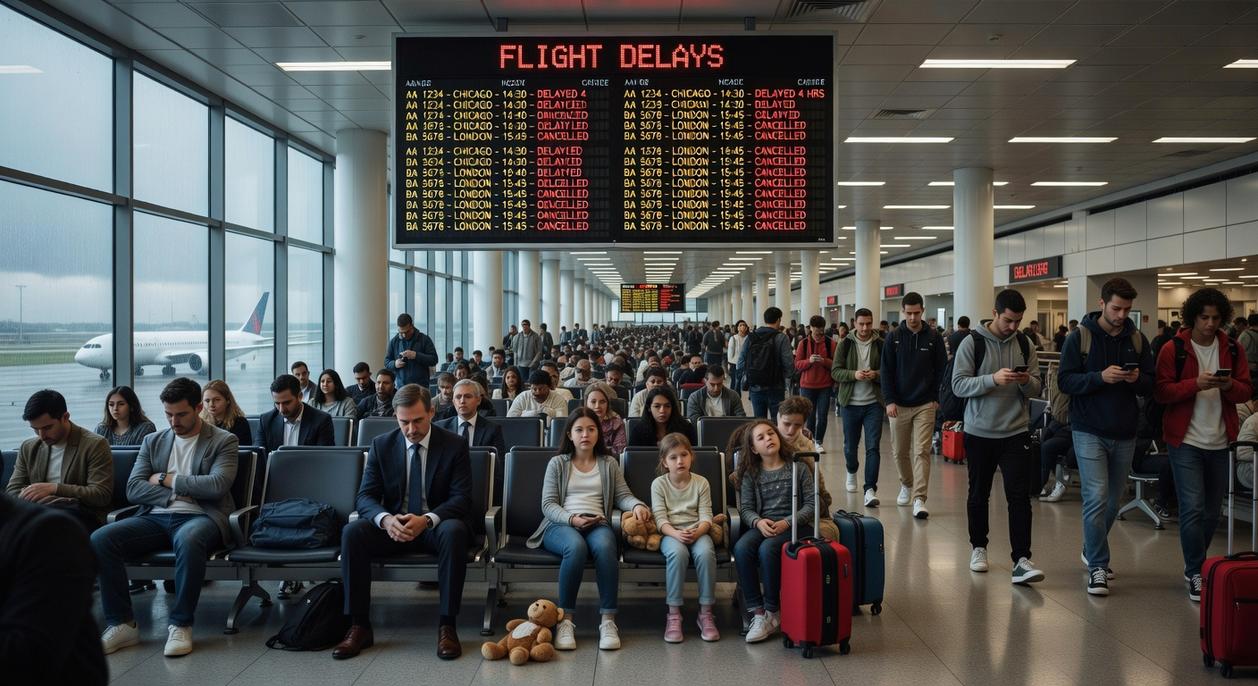
The Summer Surge
July and August routinely top delay charts. The FAA has long noted that convective thunderstorms disrupt major corridors, especially in the Southeast and Midwest (FAA NAS reports). Add peak vacation demand and you get crowded departure queues (think theme-park-level lines, but with jet engines). While competitors blame “bad weather” broadly, few connect how tightly packed flight banks amplify minor disruptions. When one aircraft is late, the next crew, gate, and departure slot all slide. That domino effect defines modern air traffic delay patterns.
Winter Woes
Snow and ice create a different bottleneck. De-icing—spraying heated glycol mixtures to remove frost—adds 10–20 minutes per aircraft, sometimes more during active snowfall (BTS winter ops data). Northern hubs like Chicago and Denver feel it first, but delays ripple nationwide because aircraft rotate across regions. A storm in Boston can ground a plane scheduled for Dallas hours later. It’s less dramatic than a blizzard montage in a holiday movie, but far more systemic.
Holiday Headaches
Thanksgiving and Christmas concentrate demand into narrow windows. Even in clear skies, infrastructure strains under baggage loads, security lines, and gate turnover. Airlines pad schedules, yet delay percentages still climb due to compressed demand (BTS On-Time Statistics).
The “First Flight Out” Advantage
Flights between 6–8 AM show the lowest delay rates, with disruptions compounding into late afternoon. Pro tip: book the earliest departure possible; you’re flying before congestion peaks. If pairing trips, consider reading open jaw flights explained pros cons and planning tips to build flexibility into tight seasons.
Location, Location, Location: How Hub Airports Create Bottlenecks
The Hub-and-Spoke System Explained
The hub-and-spoke system is an airline network model where flights route through central “hub” airports instead of flying point-to-point. It’s efficient because airlines consolidate passengers onto fewer planes (great for profits, less great for your tight layover). But concentration creates vulnerability: when one hub slows down, everything behind it stacks up.
Congestion Hotspots
Airports like Atlanta (ATL), Chicago (ORD), and Denver (DEN) frequently top delay charts because they process massive connection volumes. ATL alone handled over 100 million passengers in recent years (Hartsfield-Jackson data). ORD’s intersecting runways and DEN’s role as a central U.S. connector amplify exposure to disruptions. Some argue large hubs are optimized enough to absorb shocks. Yet historical air traffic delay patterns show volume often outweighs efficiency gains during peak periods (BTS data).
Geographic & Weather Factors
Location matters. San Francisco’s coastal fog reduces visibility, slowing arrivals. Denver faces summer thunderstorms and winter snow due to elevation. Weather resilience investments help—but geography still wins (nature doesn’t negotiate).
The Ripple Effect
Imagine a ground stop in Atlanta. Flights inbound from smaller cities can’t land. Crews time out. Aircraft miss their next departure. By evening, cancellations stretch coast to coast.
Prediction (speculative): As climate volatility increases, mega-hubs may face more frequent systemwide disruptions unless airlines diversify routing strategies.
Using the Trends to Your Advantage: Actionable Flight Planning Tips
Smart travelers don’t just hope for smooth trips—they plan for them.
Book the first flight of the day. Early departures are less likely to be disrupted because delays haven’t had time to cascade through the system (like dominos at 30,000 feet). If possible, choose non-stop flights to eliminate risky connections at busy hubs.
If you must connect, be strategic:
- Avoid airports known for congestion or frequent weather disruptions.
- Opt for layovers in historically efficient hubs.
- Allow at least 60–90 minutes between flights.
Fly off-peak. Tuesdays and Wednesdays typically see lighter traffic, while major holidays almost guarantee congestion. Fewer passengers often means fewer operational bottlenecks.
Finally, monitor the data. Use flight tracking apps to check your inbound aircraft. Spotting shifts in air traffic delay patterns can alert you to a potential “late-arriving aircraft” issue before the gate agent announces it.
Pro tip: Set real-time alerts so you’re never the last to know.
Navigating the Skies with Confidence
Air travel feels chaotic when you are stranded at Gate C17, watching DELAYED flash again (and again). But most disruptions follow predictable air traffic delay patterns tied to peak hours, storm seasons, and crowded hubs like Atlanta or Heathrow. That means you can plan smarter.
Start by booking early-morning departures; first flights are less likely to inherit a late aircraft domino effect. Check your plane’s incoming route before heading to the airport. BUILD BUFFER TIME into connections. Pack essentials in your carry-on.
- Track weather 48 hours out.
Use this approach trip and reclaim control.
Stay Ahead of Air Travel Disruptions
You came here to better understand how flight timing, planning strategies, and air traffic delay patterns affect your travel experience—and now you have the clarity to navigate them with confidence. Instead of reacting to last-minute gate changes or unexpected hold-ups, you can anticipate disruptions, choose smarter routes, and plan with precision.
Flight delays, missed connections, and wasted airport hours aren’t just inconvenient—they’re stressful and expensive. The difference between a smooth trip and a frustrating one often comes down to knowing when and how delays typically happen.
Now it’s time to put that knowledge to work. Start tracking seasonal and route-specific air traffic delay patterns, book strategically during lower-risk windows, and build flexibility into your itinerary. For deeper travel insights, real-time planning tips, and proven booking strategies trusted by thousands of frequent flyers, explore our latest updates and tools today.
Don’t let preventable delays derail your next trip. Plan smarter, travel smoother, and take control of your journey now.